AI Overviews Click Through Rate in B2B: Fewer Clicks, Anonymous Visits
What the research says about AI search and B2B clicks, what your tools now show, and how to capture the leads
AI summaries reduce clicks: Pew found Google users clicked a traditional result on 8% of visits with an AI summary against 15% without, and an Indexed B2B study measured organic CTR of 50.6% with an AI Overview against 60.7% without. Many AI-referred visitors then arrive with no referrer and no form fill.
In short
- Pew Research found Google users clicked a traditional result on 8% of visits with an AI summary, against 15% without (July 2025).
- In Indexed's 50-keyword B2B study, 84% of keywords triggered an AI Overview and organic CTR averaged 50.6% with one against 60.7% without.
- Since 31 August 2026 every Search Console property can see generative AI impressions, but not clicks.
- GA4's AI Assistant channel, added on 13 May 2026, misses no-referrer traffic, some platforms and all AI Overview clicks.
- Identifying the company behind a visit captures informed AI-referred visitors that forms and referrers miss.
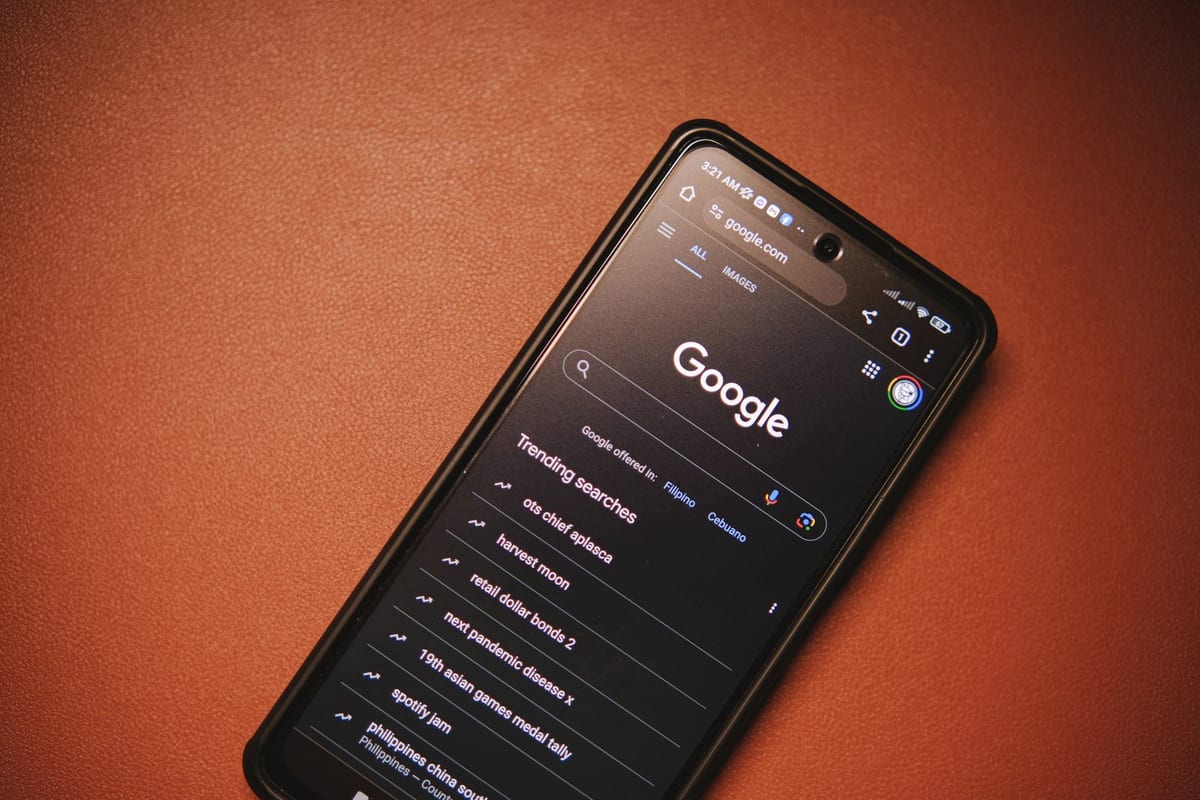
The AI Overviews click through rate for B2B searches is lower than for ordinary results, and the gap is now measurable in your own tools. Fewer people click, and many of those who do arrive without a referrer and leave without filling in a form. This piece sets out what the research says, what Search Console, GA4 and Bing now show, and what it means for capturing leads.
How much has AI search cut B2B clicks?
The best general evidence comes from Pew Research Center. In a study of 900 US adults' Google searches during March 2025, published on 22 July 2025, users clicked a traditional search result on 8% of visits where an AI summary appeared, compared with 15% of visits without one1. Clicks on links inside the AI summary happened on just 1% of visits, and users ended their browsing session on 26% of pages with a summary against 16% without1.
For B2B specifically, Indexed looked at 50 B2B keywords across enterprise software, professional services, how-to and definitional terms in US organic search. It found that 84% of those keywords triggered an AI Overview, and that keywords with an AI Overview averaged a 50.6% organic click rate against 60.7% for keywords without one2. Indexed's September 2026 update is candid that its click data comes from Ahrefs and is "a modelled estimate that moves slowly, not a live measurement of clicks"2.
| Study | Sample | With AI summary | Without |
|---|---|---|---|
| Pew Research, Jul 2025 | 68,879 US searches | 8% clicked a result | 15% |
| Indexed, Mar 2026 | 50 US B2B keywords | 50.6% organic CTR | 60.7% |
Both studies are US-based. The UK picture is likely similar in direction: Google began rolling out AI Mode, its conversational search experience, to UK users in late July 2025, as Tech.eu reported on 29 July 20253.
Can you see it in your own data yet?
Yes, in three places, though none of them tells the whole story.
Search Console. Google announced Search Generative AI performance reports on 3 June 2026 for a subset of sites, and added a note that "As of August 31, 2026, we've rolled out these insights to all websites worldwide."4 The reports show impressions, meaning how often your URLs appeared in generative AI features such as AI Overviews and AI Mode, broken down by page, country, device and date4. They do not show clicks. You can see that you were cited, not whether anyone came.
GA4. On 13 May 2026 Google added a native AI Assistant channel to GA4's default channel group, which tags sessions from recognised AI assistants with the medium ai-assistant5. Search Engine Journal reports that it rolled out gradually and reached most properties by early June 20265.
Bing Webmaster Tools. Microsoft introduced an AI Performance report earlier in 2026 showing where content is cited in AI answers across Copilot, Bing and partner experiences, and on 16 June 2026 added Intents, Topics, Citation Share and Compare in preview6. Microsoft stresses that Citation Share "does not expose competitor domains, represent traffic share, or assign quality scores to content"6.
Used together, these reports give a rough picture. Search Console tells you how often Google's AI features showed your pages. Bing tells you how often Microsoft's did. GA4 tells you how many sessions it could label as AI. None of them joins the dots between an impression and a visit, and none tells you which organisations were behind the visits you did get.
Why does GA4 still undercount AI visitors?
Because a channel can only classify the sessions that arrive with a readable source. Search Engine Journal's analysis explains several leaks5:
- One source, three channels. The same chatgpt.com traffic can appear as ai-assistant in the AI Assistant channel, as referral in Referral, and with a (not set) medium in Unassigned.
- Moving platform list. At launch Google named ChatGPT, Gemini and Claude. By June the list had changed, and Perplexity still landed in Referral.
- No referrer at all. AI traffic from mobile apps and in-app browsers often passes no referrer and lands in Direct.
- Google's own AI surfaces. Clicks from AI Overviews and AI Mode are counted as Organic Search, not as AI.
SEJ's fix is a custom channel group that matches on source and ignores medium, which applies retroactively and can include platforms Google leaves out5. That improves the count of what you can see. It cannot recover sessions that arrived with nothing to read.
What do AI-referred visitors do differently?
They arrive later in their thinking. Someone who has read a synthesised answer, with your company named in it, already knows roughly what you do before they land. Google's own guidance for site owners argues that generative AI search offers "new opportunities to reach people who may be more inclined to engage with your site, spend more time with your content, or even convert"7.
That is plausible, but treat vendor claims about AI conversion rates with care: the samples are small, US-weighted and built on the same imperfect attribution described above. What is safe to say is narrower. AI-referred visitors are fewer, they are often already informed, and many arrive through channels your analytics cannot label.
What does this mean for lead capture?
It means the form is doing less of the work. If fewer people click, and those who click are further along, then each anonymous visit carries more weight than it used to. Waiting for a form fill means waiting for a small share of an already smaller number.
It also changes how you read organic performance. Falling organic sessions alongside steady or rising impressions is what you would expect if AI answers are satisfying more searches on the results page. That does not necessarily mean your content got worse, and a rewrite aimed purely at clawing back clicks may not bring them back.
The practical answer is to identify the organisation behind the visit. Website visitor identification works from the network the visit comes from, not from the referrer, so it does not matter whether the session arrived tagged as ai-assistant, stranded in Direct, or counted as Organic Search. A mid-sized firm reading three pages about your service after an AI answer shows up as that firm, whatever channel GA4 gave it.
Scout does this for UK B2B teams. It names the company behind a visit, gives each match a confidence score from 1 to 99, and, if you connect GA4 and Search Console, shows session depth, pages read and the search queries associated with each company. Company-level identification is not the same as knowing who the person was: Scout identifies organisations, not individuals. For how the method works, see our guide to website visitor identification and how to see which companies visit your website.
One caution: not every "visit" is a person. Headless browsers and AI agents also run from cloud networks, which is why automated traffic should be scored out. We cover that in ghost visits from AI crawlers and bots.
Five practical moves
- Write answer-first pages. Put the direct answer to the question at the top of the page, then the detail. Google's guide says its AI features are "rooted in our core Search ranking and quality systems" and rewards "non-commodity content" with a unique point of view7.
- State your entity facts plainly on the homepage. Who you are, what you sell, where you operate and who you serve, in plain sentences an AI summary can lift accurately.
- Check Bing indexation. Bing's AI Performance report covers Copilot and partner AI experiences, so make sure your key pages are indexed there and watch where you are cited6.
- Identify anonymous visits. Stop relying on the referrer and the form. Put company-level identification on the site so informed visitors are not lost.
- Treat AI impressions as a top-of-funnel metric. Search Console's generative AI impressions show visibility, not traffic4. Track them monthly next to identified companies, not next to form fills.
Where this leaves B2B marketers
AI search has made the top of the funnel wider and the middle narrower. The measurement tools have improved in 2026, but they still show citations and partial channels rather than the full set of people who came. The gap between the two is mostly anonymous visits, and that is the part you can do something about.
Your AI-referred visitors are not filling in forms. Find out which companies they came from with a 14-day free trial, no card needed, or see how plans are measured.
Frequently asked questions
Should I block AI crawlers?
Not the ones that make you visible. Search-role crawlers feed the AI answers that cite you, so blocking them removes you from those answers. Blocking training crawlers is a separate decision about how your content is reused.
Does AI Mode in the UK show my site?
It can. Google began rolling out AI Mode in the UK in late July 2025, and its answers include links to web pages. Search Console's generative AI performance report, available to all sites since 31 August 2026, shows whether your URLs appeared in AI Mode and AI Overviews.
How do I attribute a lead to ChatGPT?
Partly. Build a GA4 custom channel group that matches AI sources regardless of medium, and ask new leads how they heard of you. Visits from AI apps often arrive with no referrer, so some will always sit in Direct.
Does Search Console show clicks from AI Overviews?
Not in the dedicated generative AI report, which shows impressions only. Clicks from AI Overviews and AI Mode are included in the overall performance report and are counted as Organic Search in GA4.
Sources
- Pew Research Center: Google users are less likely to click on links when an AI summary appears in the results pewresearch.org
- Indexed: AI Overview CTR study 2026 joinindexed.com
- Tech.eu: Google launches AI Mode in UK search tech.eu
- Google Search Central Blog: Introducing Search Generative AI performance reports in Search Console developers.google.com
- Search Engine Journal: How To Track AI Traffic In GA4 Without Undercounting It searchenginejournal.com
- Microsoft Bing Blog: New AI Visibility Insights in Bing Webmaster Tools blogs.bing.com
- Google Search Central: Optimizing your website for generative AI features on Google Search developers.google.com